
Hacken Security Audit9.5/10
Wallet Architecture
- Date
- 20 February 2026
- Findings
- 0 critical, 0 high, 1 medium, 1 low
The DIONE Wallet has undergone a rigorous security assessment by Hacken, achieving an overall score of 9.5/10. This technical document outlines the specific architectural decisions and cryptographic implementations that safeguard user assets.
We will never ask for your seed phrase or private key. Not by email, DM, support chat, pop-up, or any website. Anyone who asks is attempting to steal your funds. Seed phrases are entered only inside wallet software you installed from an official source.
Always verify you are on our official domain: dionewallet.com. If anyone — by DM, email, support ticket, or pop-up — asks you to do any of the above, treat it as an attack and report it via /support.
All binaries distributed via official channels (dionewallet.com, GitHub Releases) are cryptographically signed. This ensures the application has not been tampered with post-compilation. We utilize deterministic build processes where feasible to enable independent verification of the compiled artifacts against the audited source code hash.
SHA256: 8fe5436666fd6b96f95d8fa951c5176b1aaed8396d1de5c1ec88b59b2dc527aeKeys are generated entirely client-side using standard BIP-39 mnemonic derivation. The private key material never leaves the secure enclave of your device. We employ AES-256-GCM encryption for local storage of keys, utilizing a derivation function (Argon2id) on your user-defined password to decrypt the payload only at the moment of signing. See self-custody vs. custodial wallets for what this architecture means in practice.
DIONE Wallet integrates with industry-standard hardware signing devices. Keys stay offline on the device; the wallet handles transaction construction and broadcast.
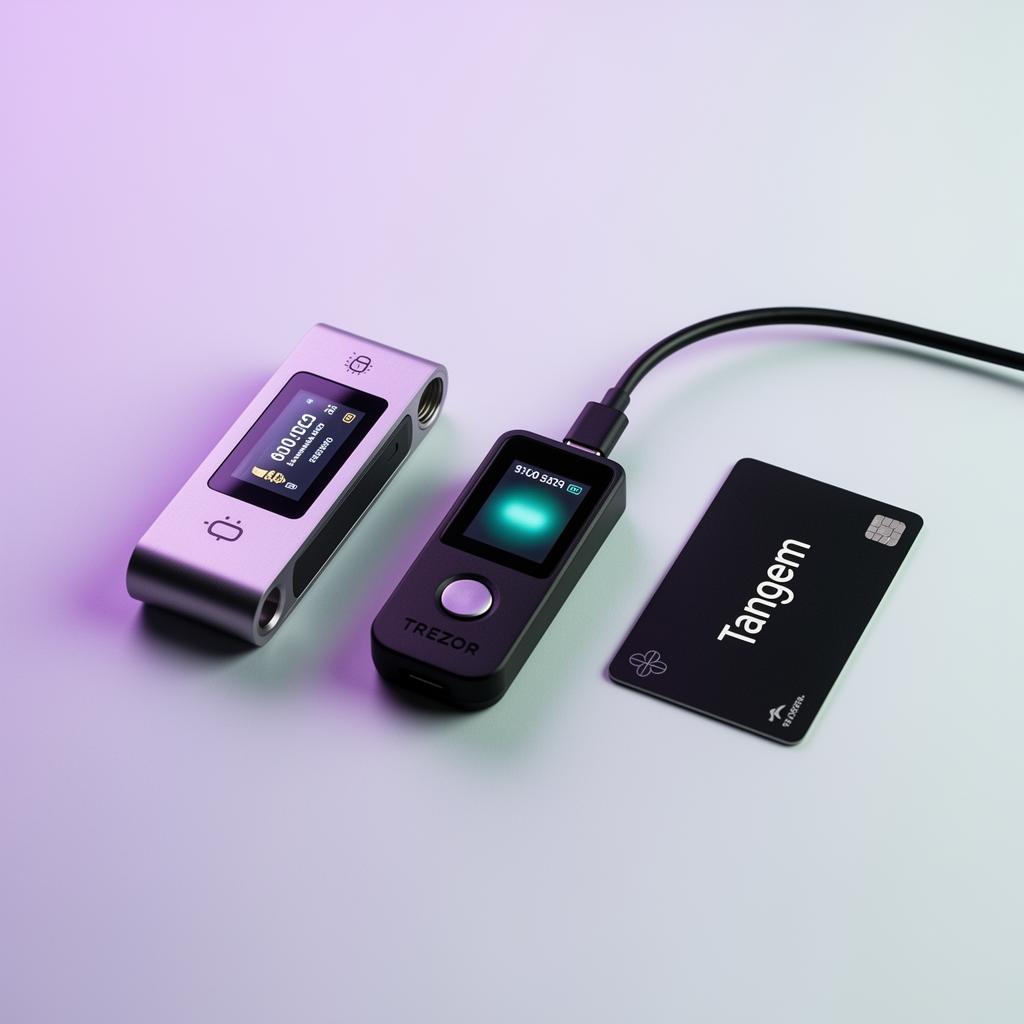
While the core DIONE protocol smart contracts are fully open-source and verifiable on-chain, the proprietary routing algorithms and UI components of the DIONE Wallet application are currently closed-source to protect intellectual property and mitigate immediate cloning risks. We rely on extensive third-party auditing (Hacken) to verify the integrity of the closed-source components. If open-source code review is a hard requirement for you, MetaMask, Rabby, and Frame are open-source EVM alternatives that work with Odyssey Chain via custom RPC.
Chain audit completed December 2023 · Documentation 10/10 · Code 9/10
Found a vulnerability? Use our support channels for responsible disclosure for both Odyssey Chain and DIONE Wallet.
Next, see how EVM chain support and native DIONE staking work, or follow our wallet recovery walkthrough. Ready to install? Download DIONE Wallet for Windows, macOS or Linux.
Your private keys are encrypted and stored locally in the secure enclave (Keychain on macOS, DPAPI on Windows, libsecret on Linux) of your device. They are never transmitted to our servers.
You can restore your wallet on a new device using the 12 or 24-word Secret Recovery Phrase generated during setup. DIONE cannot recover this phrase for you.
No. To minimize phishing vectors and browser-based vulnerabilities, DIONE Wallet is exclusively distributed as a native desktop application.
Biometrics (Touch ID on macOS, Windows Hello on Windows) are used to unlock the locally encrypted keystore. The biometric data itself is managed by the OS and never accessed by the app directly.
DIONE Wallet connects directly to Odyssey Chain RPC nodes to broadcast transactions. We do not maintain a central database mapping IP addresses to wallet addresses.
Report critical vulnerabilities in the wallet infrastructure through our support channels at /support — public, tracked, no DM intermediary.
Updates are pushed exclusively through the official channels at dionewallet.com and our GitHub Releases mirror, with cryptographic signature verification on each binary. Do not download installers from third-party sites.
No. The smart contracts do not contain administrative backdoors or blocklist functions that would allow the core team to seize or freeze user assets.
The WalletConnect integration includes an integrated blocklist of known malicious contracts and domains, updated dynamically via community security feeds.
Native multi-signature functionality is planned for v2. Currently, users requiring multi-sig should utilize Safe (formerly Gnosis Safe) via the WalletConnect bridge.